Introduction
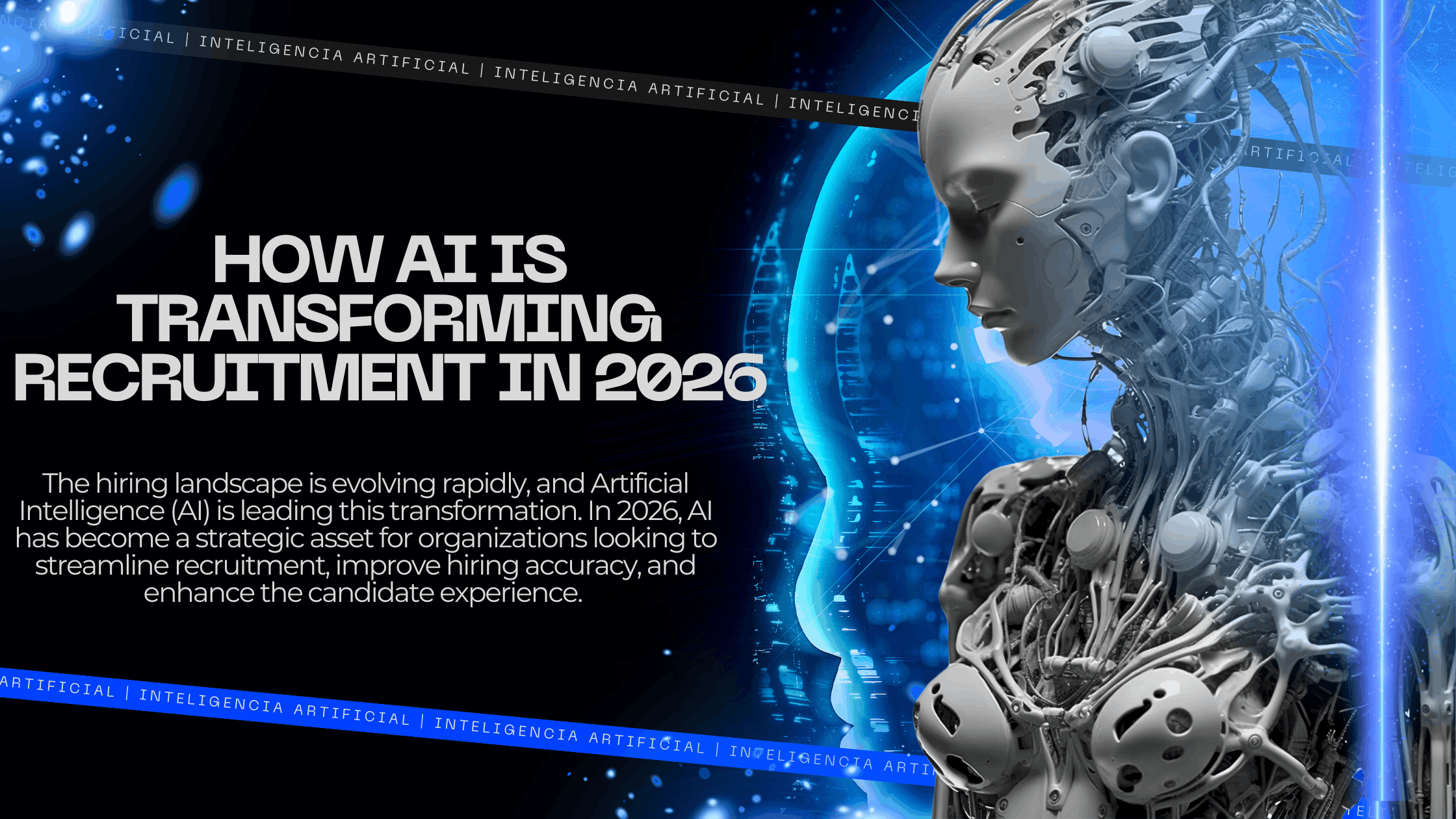
The recruitment industry is experiencing its biggest transformation in decades. In 2026, Artificial Intelligence (AI) is no longer just a futuristic concept—it has become an essential part of modern hiring strategies. From sourcing qualified candidates to conducting initial interviews and predicting employee success, AI is helping recruiters hire smarter, faster, and more efficiently.
As organizations compete to attract top talent in an increasingly competitive market, recruitment agencies and HR professionals are adopting AI-powered technologies to reduce hiring time, improve candidate quality, and enhance the overall recruitment experience. Rather than replacing recruiters, AI is empowering them to focus on what matters most—building relationships, understanding people, and making strategic hiring decisions. Industry trends also show growing adoption of AI-assisted screening, skills-based hiring, and recruiter oversight rather than fully automated hiring decisions.
In this article, we’ll explore how AI is transforming recruitment in 2026, the latest trends shaping the industry, and why businesses that embrace AI today will gain a competitive advantage tomorrow.
The Evolution of Recruitment
Recruitment has evolved significantly over the past decade.
Previously, recruiters spent countless hours:
- Reviewing hundreds of resumes
- Scheduling interviews manually
- Sending follow-up emails
- Searching multiple job portals
- Screening unsuitable candidates
These repetitive tasks often delayed hiring and increased recruitment costs.
Today, AI automates these administrative activities, allowing recruiters to spend more time evaluating talent, understanding company culture, and building strong candidate relationships.
The result?
- Faster hiring
- Better candidate experience
- Improved hiring accuracy
- Lower recruitment costs
- Higher productivity
- AI-Powered Resume Screening
One of the most time-consuming parts of recruitment is resume screening.
A single job posting can attract hundreds or even thousands of applications.
AI recruitment software can instantly:
- Analyze resumes
- Match candidate skills
- Compare experience with job requirements
- Identify top applicants
- Rank candidates automatically
Instead of spending several hours reviewing resumes manually, recruiters receive a shortlist within minutes.
This significantly reduces Time-to-Hire while improving hiring efficiency.
- Intelligent Candidate Matching
Traditional keyword-based recruitment often misses highly qualified candidates simply because their resumes use different wording.
Modern AI systems understand:
- Skills
- Experience
- Industry knowledge
- Career progression
- Certifications
- Job preferences
Instead of matching only keywords, AI evaluates the overall profile and recommends candidates who best fit the role.
This leads to higher-quality hiring decisions and better long-term employee performance.
- AI Chatbots Improve Candidate Experience
Candidates expect quick communication throughout the hiring process.
AI-powered recruitment chatbots are now available 24/7 to:
- Answer candidate questions
- Share job descriptions
- Schedule interviews
- Collect basic information
- Provide application updates
- Send reminders
This improves candidate engagement while reducing the workload of recruiters.
A positive candidate experience also strengthens the employer brand.
- Smarter Job Descriptions
Writing an effective job description isn’t always easy.
AI tools now help recruiters create job postings that are:
- Clear
- Inclusive
- SEO optimized
- Skill-focused
- Free from biased language
Better job descriptions attract better candidates and reduce irrelevant applications.
- Skills-Based Hiring Becomes the New Standard
In 2026, companies are shifting away from hiring based solely on degrees or years of experience.
Instead, AI evaluates:
- Practical skills
- Technical abilities
- Certifications
- Project experience
- Portfolio quality
- Problem-solving capabilities
Skills-first hiring helps organizations discover talented professionals who may have been overlooked by traditional recruitment methods. Skills-based hiring has become one of the defining recruitment trends as employers increasingly prioritize demonstrated capability over credentials alone.
- Predictive Hiring Analytics
AI doesn’t just evaluate candidates—it also predicts hiring success.
Advanced recruitment platforms analyze historical hiring data to estimate:
- Job performance
- Employee retention
- Cultural fit
- Career growth potential
- Turnover risk
These insights help organizations make data-driven hiring decisions rather than relying solely on intuition.
- Automated Interview Scheduling
Interview scheduling used to involve multiple emails and phone calls.
AI now automatically:
- Checks interviewer availability
- Matches candidate schedules
- Sends invitations
- Issues reminders
- Reschedules when necessary
This eliminates administrative delays and speeds up the hiring process.
- AI-Assisted Video Interviews
Many organizations now use AI-assisted video interviews for initial candidate assessments.
These platforms can analyze:
- Communication skills
- Confidence
- Language proficiency
- Job-specific responses
However, leading organizations increasingly use these insights as decision support rather than allowing AI to make final hiring decisions. Human recruiters remain responsible for evaluating context, judgment, and overall fit.
- Reducing Recruitment Bias
Human bias has always been one of the biggest challenges in recruitment.
AI helps reduce unconscious bias by evaluating candidates based on:
- Skills
- Experience
- Qualifications
- Competencies
Instead of personal assumptions, hiring decisions become more objective.
However, organizations must regularly monitor AI systems to ensure fairness, transparency, and compliance with evolving regulations.
- Faster Hiring with Better Results
One of AI’s biggest advantages is speed.
Recruitment tasks that previously required several weeks can now be completed within days.
Companies using AI experience benefits such as:
- Reduced hiring costs
- Faster recruitment cycles
- Improved recruiter productivity
- Better candidate engagement
- Higher hiring quality
- Improved retention
AI handles repetitive tasks while recruiters focus on strategic conversations and relationship building.
Challenges of AI in Recruitment
While AI offers tremendous benefits, it also comes with responsibilities.
Organizations should be mindful of:
Data Privacy
Candidate information must be handled securely and ethically.
Algorithm Bias
AI models should be regularly audited to ensure fair hiring practices.
Human Oversight
AI should assist recruiters—not replace human judgment.
Transparency
Candidates should understand when AI is involved in the hiring process.
The most successful companies use AI as a powerful assistant while keeping final hiring decisions in human hands.
The Future of AI Recruitment
The future of recruitment is becoming increasingly intelligent.
Emerging innovations include:
- Autonomous sourcing agents
- Predictive workforce planning
- Personalized candidate engagement
- AI-powered onboarding
- Internal talent marketplaces
- Continuous skills assessment
Recruiters will increasingly become strategic talent advisors while AI handles repetitive operational work.
Companies that invest in AI today will build stronger, faster, and more agile recruitment processes for years to come.
Why Human Recruiters Will Always Matter
Despite rapid AI advancements, recruitment remains fundamentally about people.
AI can analyze data.
AI can automate workflows.
AI can recommend candidates.
But AI cannot fully replace:
- Human empathy
- Relationship building
- Negotiation skills
- Leadership assessment
- Emotional intelligence
- Cultural understanding
The future isn’t AI versus recruiters.
It’s AI working alongside recruiters.
The organizations achieving the best hiring outcomes combine AI-powered efficiency with human expertise to deliver exceptional candidate experiences.
Conclusion
Artificial Intelligence is redefining recruitment in 2026 by making hiring faster, smarter, and more efficient than ever before. From intelligent resume screening and candidate matching to predictive analytics and automated communication, AI empowers recruiters to focus on strategic decision-making instead of repetitive administrative tasks.
Businesses that embrace AI responsibly will improve hiring quality, reduce recruitment costs, and stay ahead in the competition for top talent.
At Himflax, we believe that technology should enhance human expertise—not replace it. By combining advanced recruitment strategies with AI-driven insights, we help organizations connect with the right talent while ensuring every hiring decision remains thoughtful, ethical, and people-focused.
The future of recruitment has arrived—and it’s powered by the perfect partnership between Artificial Intelligence and human intelligence.